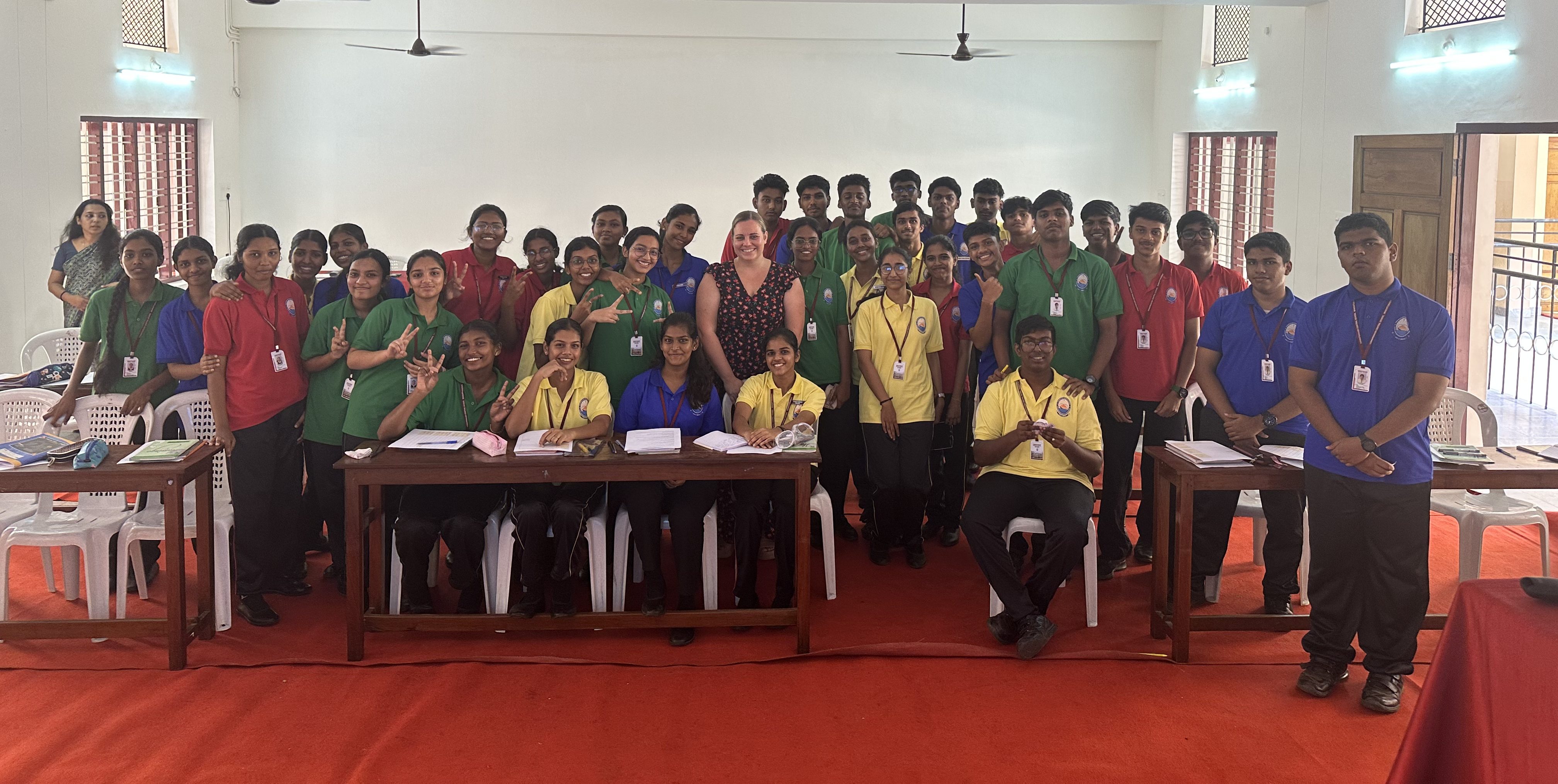
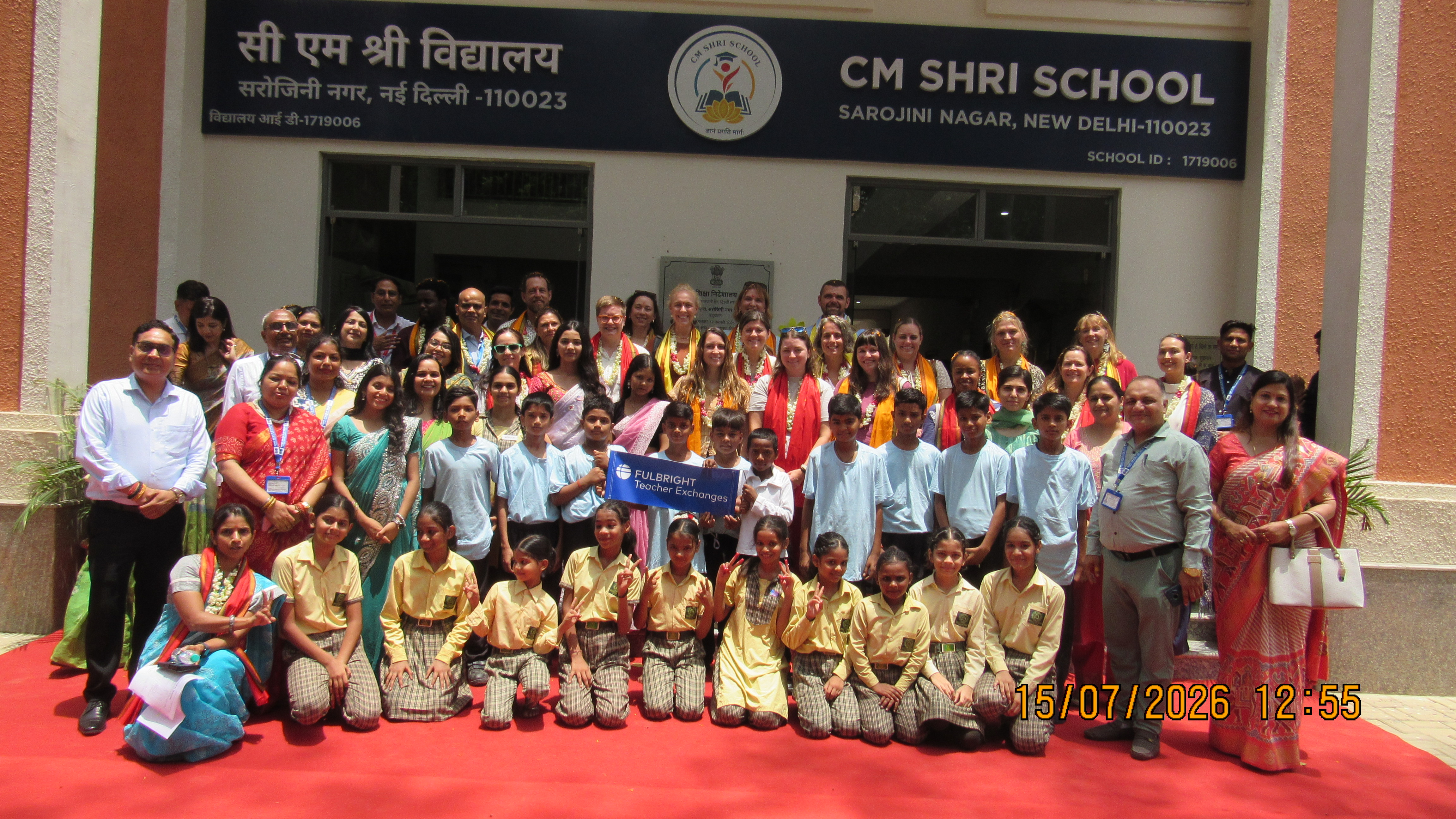
In July 2026, I traveled to India with 18 other US educators. We visited schools, collaborated with Indian colleagues, and engaged in cultural experiences.
Read about my adventures at my blog, and see reflections on my guiding question below!

How do Indian teachers bring local and national texts, authors, ideas, and culture into literacy and literary instruction?
As an English teacher, I’m always thinking about and traveling through books. When I received my field experience location, my first instinct was to seek out Indian books and authors. Embarrassingly, I realized that I could only name a few Indian texts, which says far more about me than about Indian literature.
This led me to wonder about literature instruction in Indian schools. Which texts do Indian schools study? Do they bring in texts from the American and British literary canon? What does the Indian canon look like? More broadly, how are local and national texts, authors, ideas, and culture brought into the classroom?
As I visited Indian schools and met with Indian teachers, I learned that bringing Indian culture into the classroom is an essential part of all instruction. Of course, “Indian” has so many definitions. India has 28 states, 22 official languages, and 121 major languages with at least 10,000 speakers. Indian culture encompasses the mountains, the deserts, the coast, the backwaters. There are thousands of traditions that can be described as “Indian,” so what is brought into the classroom can vary by region.
There were a number of ways I saw Indian schools succeed at bringing local ideas and culture into instruction. At the teacher training institute in Delhi(DIET), we observed teachers training in traditional arts and music with the goal of integrating these arts into the elementary classroom. The NEP (National Education Plan 2020) pushes for instruction in home languages, suggesting home culture is an essential part of instruction across India. Because students study Hindi and local languages, it is likely that they encounter and study local literature. Similarly, reading programs like Pratham’s Teaching at the Right Level instruct students through high-interest, relatable texts in local languages.
At the same time, I found that my goal of understanding the Indian canon went unfulfilled. Admittedly, my research was limited in scope, but in my experience, most English literature instruction in India comes from a textbook. As a result, students do not study novels. While there may be one or two Indian authors represented in each grade-level textbook, the majority seemed to be English, American, or global authors. At Vasant Valley School in Delhi, students have the chance to read complete works of literature, but like my own students, they read texts like Julius Caesar by William Shakespeare. Teachers assured me that they also study Indian texts, but it seemed to be in some of the younger grades.
When I spoke to students about their favorite books to read outside of class, many cited the same texts as my students in the US: Percy Jackson, Harry Potter, Shatter Me, and other YA books that have made their way to television or the movies. I wonder why these texts are so popular even across the world. Does social media play a role? Are there fewer texts in Hindi, Malayalam, or local languages for high school level reading?
During my visits, I saw some lovely libraries, but even there, I noticed a snag: many texts appeared to be for younger readers, and many of them were nonfiction. In Kerala, my host teacher’s daughter said that students had to pay for access to the library, so most students buy books if they want to read. Granted, this was a government-aided school (private but partly financed by the government), so it’s possible government schools operate differently. Still, it seemed like most students have limited access to literature. If students aren’t reading longer texts in class, and if they can’t access texts on their own, how are teachers building a culture of reading? If teachers can’t build a culture of reading, it becomes more difficult to provide effective literacy and literary instruction regardless of which texts are being taught.
As I think back over my experience, it’s clear that Indian culture and tradition is everywhere, both in the classroom and out of it. Tradition, food, clothing, music, festivals – they’re all important elements of a student’s education. But it’s important to remember that not every culture is celebrated equally. In the US, our literary canon privileges dead, white, male authors. Who decides the Indian canon? Who decides which traditional arts or songs make their way into the classroom? Who decides which languages are taught and spoken in schools across India?
Heading back into school, I’m thinking about how I can embrace India’s emphasis on the “glocal”: local experiences alongside global perspectives. What traditions from the northeast can I bring into my New Hampshire classroom? Where can we visit? What can we celebrate? At the same time, I will continue to challenge the “norm” and encourage students to think about who speaks through an English syllabus and who is silenced.